Pole Buildings in Hampshire County, WV
Livestock Pole Barns in Hampshire County, WV: Designing for Cattle, Sheep, and Goats
A livestock barn is a working tool, not a showpiece. The best ones make feeding faster, keep animals healthier, and hold up to years of manure, mud, and machinery.
In Hampshire County, where farms work hilly ground and winters can be raw, a well-planned pole barn can make a real difference to daily chores. This guide covers the design decisions that matter most for livestock buildings, whether you're raising beef cattle, sheep, goats, or a mix.
Decide What the Barn Needs to Do
Livestock barns usually serve one or more of these purposes:
- Shelter from wind, rain, snow, and summer sun
- Feeding areas with bunks or hay feeders
- Handling for sorting, loading, and vet work
- Calving, lambing, or kidding pens
- Storage for hay, bedding, feed, and equipment
Trying to do everything in one open space often leads to compromises. Many farms separate hay storage from animal areas for fire safety, air quality, and simpler cleanup.
Open-Front or Enclosed?
Open-front sheds
Three walls and a roof, with the open side facing away from prevailing winter winds. Open-front pole barns offer excellent ventilation, low cost, and easy access for animals and equipment. They're a common choice for beef cattle and sheep that spend most of their time outdoors.
Enclosed barns
Fully enclosed buildings provide more protection, which can matter for young stock, birthing season, and winter feeding. They require careful ventilation to prevent moisture and ammonia buildup.
Hybrid designs
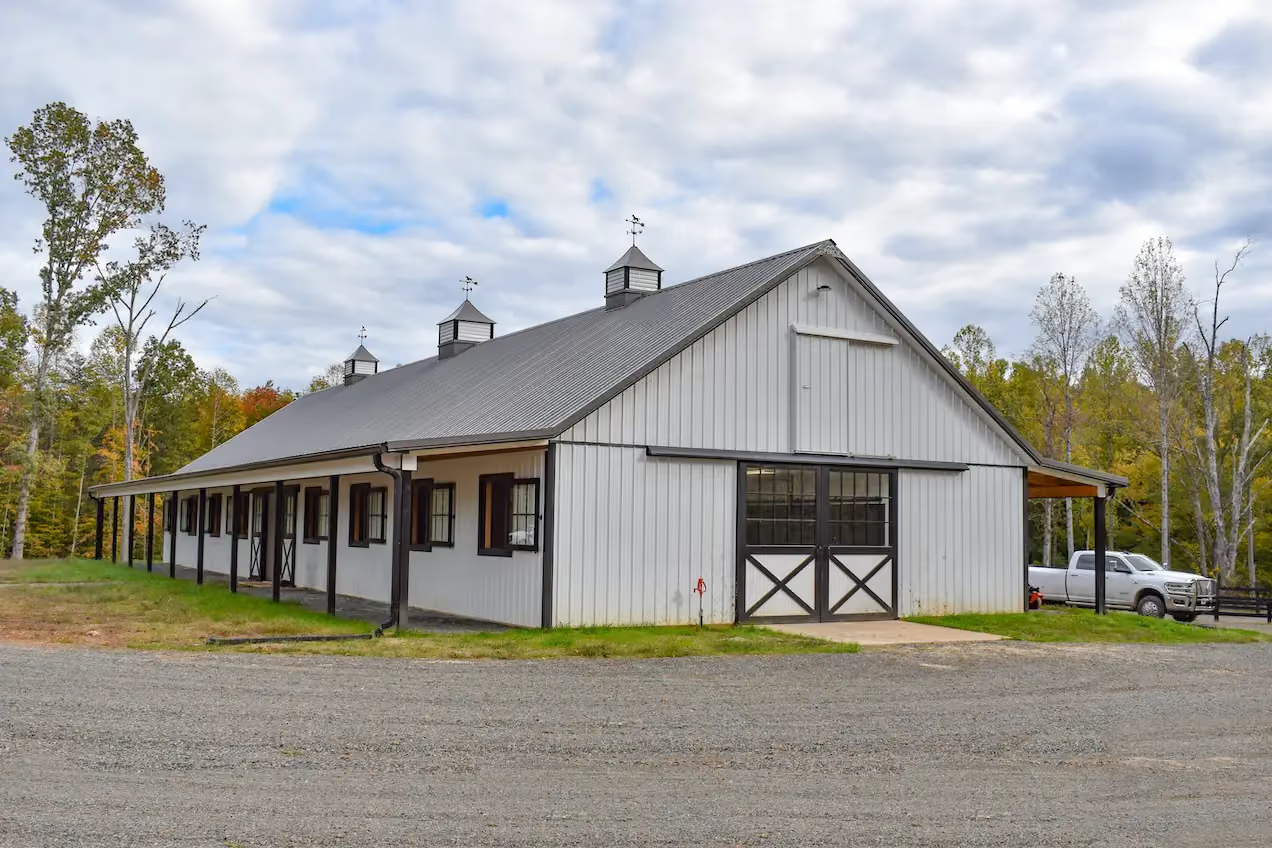
Curtain walls, large sliding doors, or removable panels let you open a barn in summer and close it in winter.
Ventilation and Moisture
Animals give off heat and a surprising amount of moisture. Without airflow, that moisture condenses on cold surfaces, drips, and creates damp bedding and respiratory problems. Good livestock barns include:
- Ridge vents or open ridges
- Eave openings to draw fresh air in
- Adequate eave height for air movement
- Condensation control under roof steel
Space and Layout
Space needs vary by species, size, and how long animals stay inside. Plan for adequate resting area, feed bunk space so timid animals can eat, and alleys wide enough for a tractor to clean pens and deliver feed. Your county extension office can provide species-specific space guidelines. WVU Extension serves Hampshire County farmers with livestock management resources.
Durable Materials Where Animals Live
Manure and urine are corrosive. In animal areas, consider:
- Treated posts rated for ground contact, or posts set on concrete brackets or piers
- Splash boards or concrete curbs along the base of walls
- Heavier lower wall liners where cattle rub or push
- Concrete floors in feeding alleys and handling areas
- Gutters and downspouts to keep roof water out of lots and away from manure
Site Selection on Hilly Ground
Hampshire County terrain makes site selection especially important:
- Build on higher, well-drained ground
- Keep the barn away from streams and wells to protect water quality
- Orient the open side away from prevailing winter winds
- Allow room for trucks and trailers to turn around
- Plan for future expansion along one end of the building
Don't Forget Equipment and Hay
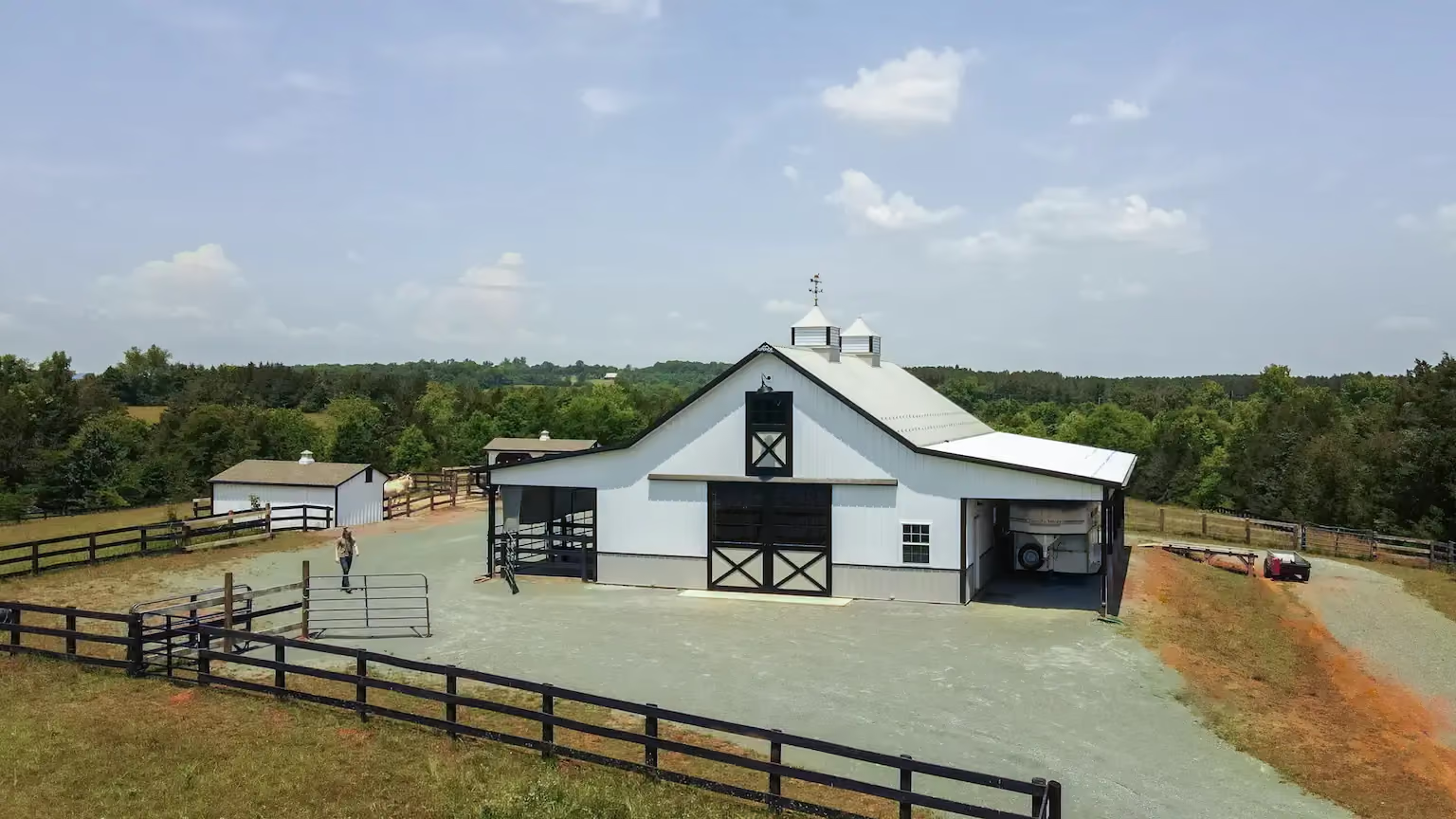
Many farms pair a livestock barn with a separate equipment shed or hay barn. Post-frame construction makes large clear-span buildings affordable, with tall sidewalls and wide doors for tractors, round balers, and hay wagons. Storing hay under cover reduces spoilage, and keeping it in its own building lowers fire risk to animals.
Why Pole Barns Work for Livestock
Post-frame buildings go up quickly, need less foundation work than many other construction methods, and are easy to expand as your herd grows. Their wide spans and simple framing make them adaptable to pens, alleys, and handling systems.
Plan for Winter Feeding
Winter is when livestock buildings work hardest. Think about where round bales will be stored and how they'll get to feeders without a long tractor trip through mud. Covered feeding areas reduce hay waste and keep animals out of the worst weather. Frost-free waterers, protected electrical service for heaters, and a dry path for chores all make cold mornings easier for you and your animals.
Handling Facilities
A good handling area saves time and reduces stress on animals and people. Consider building a covered handling area with pens, an alley, and a loading chute into your barn plan. Placing it near the driveway makes loading trailers easier, and a roof overhead lets you work cattle or sheep in rain or snow without delays.
Lighting and Power
Chores often happen before sunrise or after dark, especially in winter. Plan bright, durable lighting in feeding alleys and handling areas, and outlets for heaters, clippers, and tools. Wiring should be protected in conduit where animals or equipment could damage it, and fixtures should be rated for damp, dusty environments.
Agricultural Pole Buildings in Hampshire County
Superior Buildings builds livestock barns, hay barns, and equipment sheds for farms across West Virginia's Eastern Panhandle, including Hampshire County. We'll help you plan a barn around your animals, your land, and your workflow. See our agricultural pole buildings page for more.
Contact us or call 540-269-2696 to request a free quote.