Pole Buildings in Frederick County, VA
Pole Barn Repairs in Frederick County: Spotting Problems Before They Spread
Most pole barn failures don't happen overnight. They start with a loose screw, a clogged gutter, or a post that stays wet one season too many.
Frederick County has plenty of older pole barns, some built decades ago for orchards, dairies, and family farms. Many are still solid. Others are showing their age. Catching problems early can save a building that might otherwise need replacing. Here's what to look for, which repairs make sense, and when a renovation is the better path.
Seven Common Pole Barn Problems
1. Roof leaks
Leaks on steel roofs usually come from worn screw washers, backed-out fasteners, damaged ridge caps, or rust at panel laps. Small leaks rot purlins and trusses over time and can ruin stored hay or equipment.
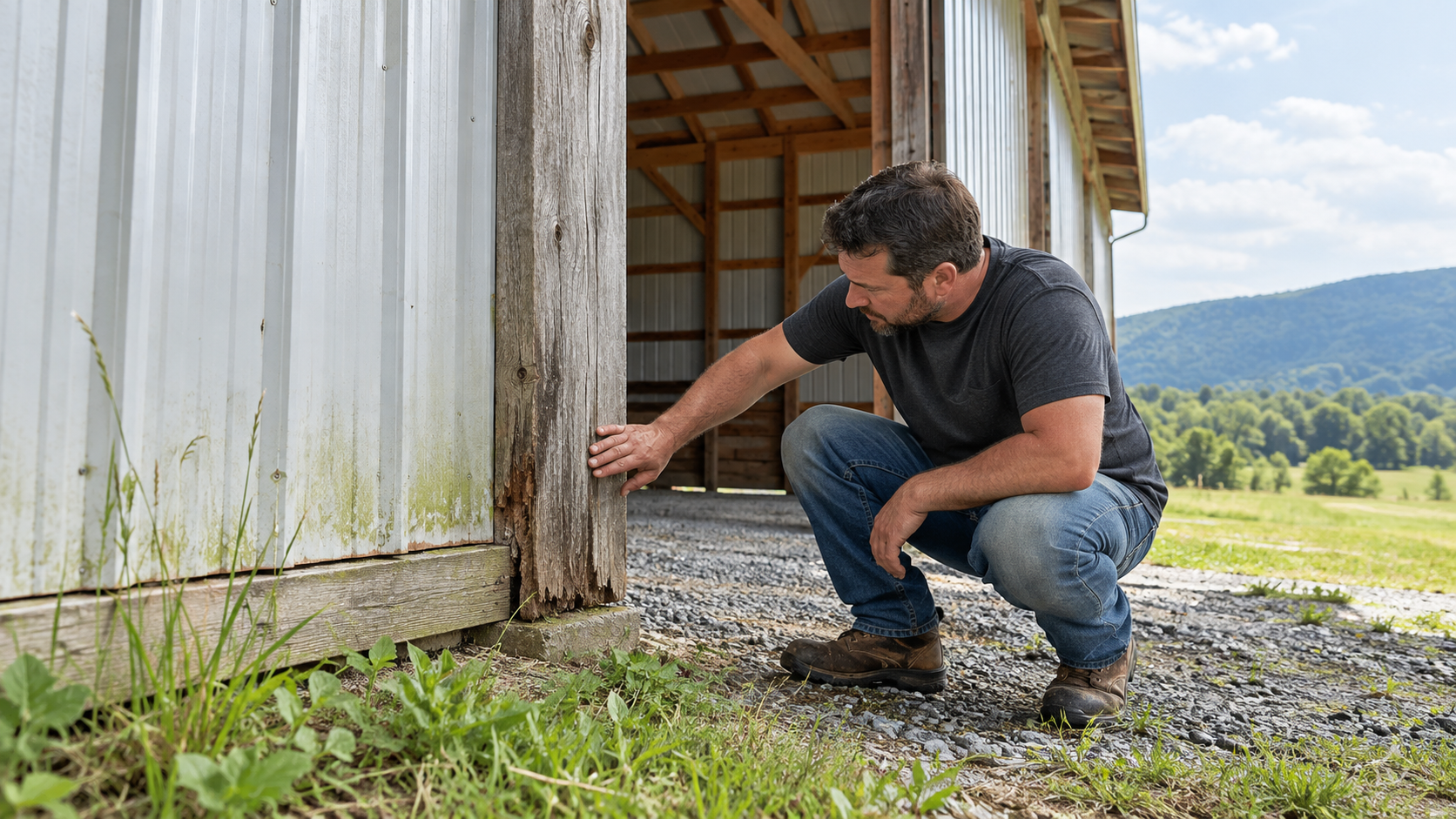
2. Post rot at ground level
Wood posts are most vulnerable where they meet the soil. Older posts, or posts in areas where water pools, can soften and lose strength. Signs include leaning walls, gaps at the base, or soft wood when probed.
3. Sagging roof lines
A dip in the ridge or eave line can point to damaged trusses, rotted posts, heavy snow damage, or missing bracing.
4. Damaged siding
Dents from equipment, holes, rust along the bottom edge, and loose panels let in weather, birds, and rodents.
5. Door problems
Sliding doors jump tracks or drag. Overhead doors wear out springs, cables, and seals. Damaged door headers can affect the structure around the opening.
6. Condensation and rust
Dripping from the underside of the roof leads to rust, mold, and damaged contents. It's common in older buildings built without condensation control or ventilation.
7. Drainage issues
Missing gutters, poor grading, or downspouts that dump water against the building speed up post rot and erode the floor and base.
A Seasonal Inspection Checklist
Walk your building in spring and fall and check:
- Roof from the ground with binoculars for loose panels or missing screws
- Inside on a rainy day for drips and stains
- Posts at ground level for softness, gaps, or insect damage
- Walls for bowing, leaning, or loose girts
- Doors for smooth operation
- Gutters and downspouts for clogs and proper discharge
- Grading around the building for pooling water
Repairs That Usually Make Sense
- Re-screwing a roof with new gasketed fasteners
- Replacing damaged panels or ridge caps
- Repairing or reinforcing posts, including methods that address rot at the base
- Adding gutters and correcting grading
- Replacing doors or upgrading sliding doors to overhead doors
- Adding ventilation or condensation control
When Renovation Beats Patching
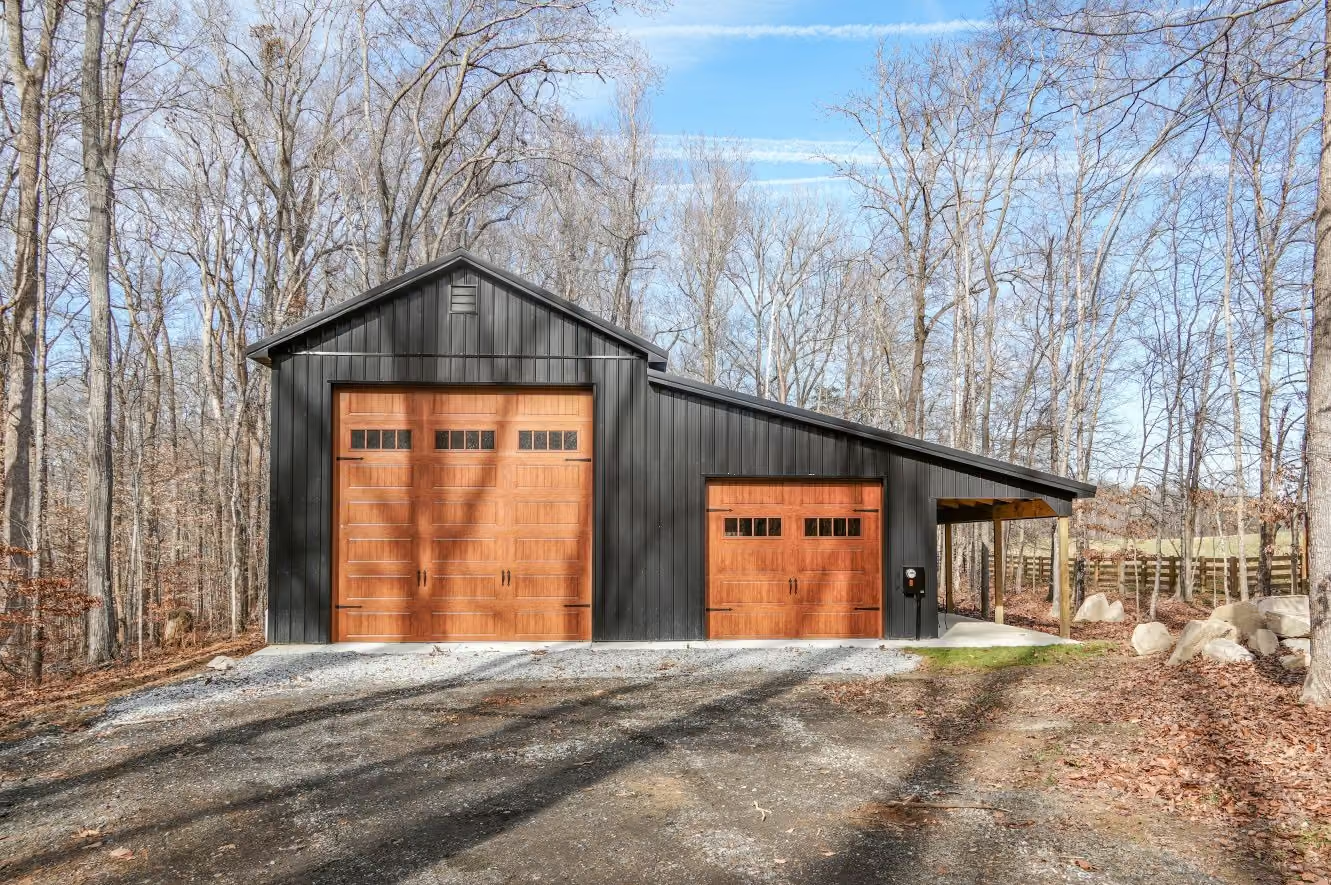
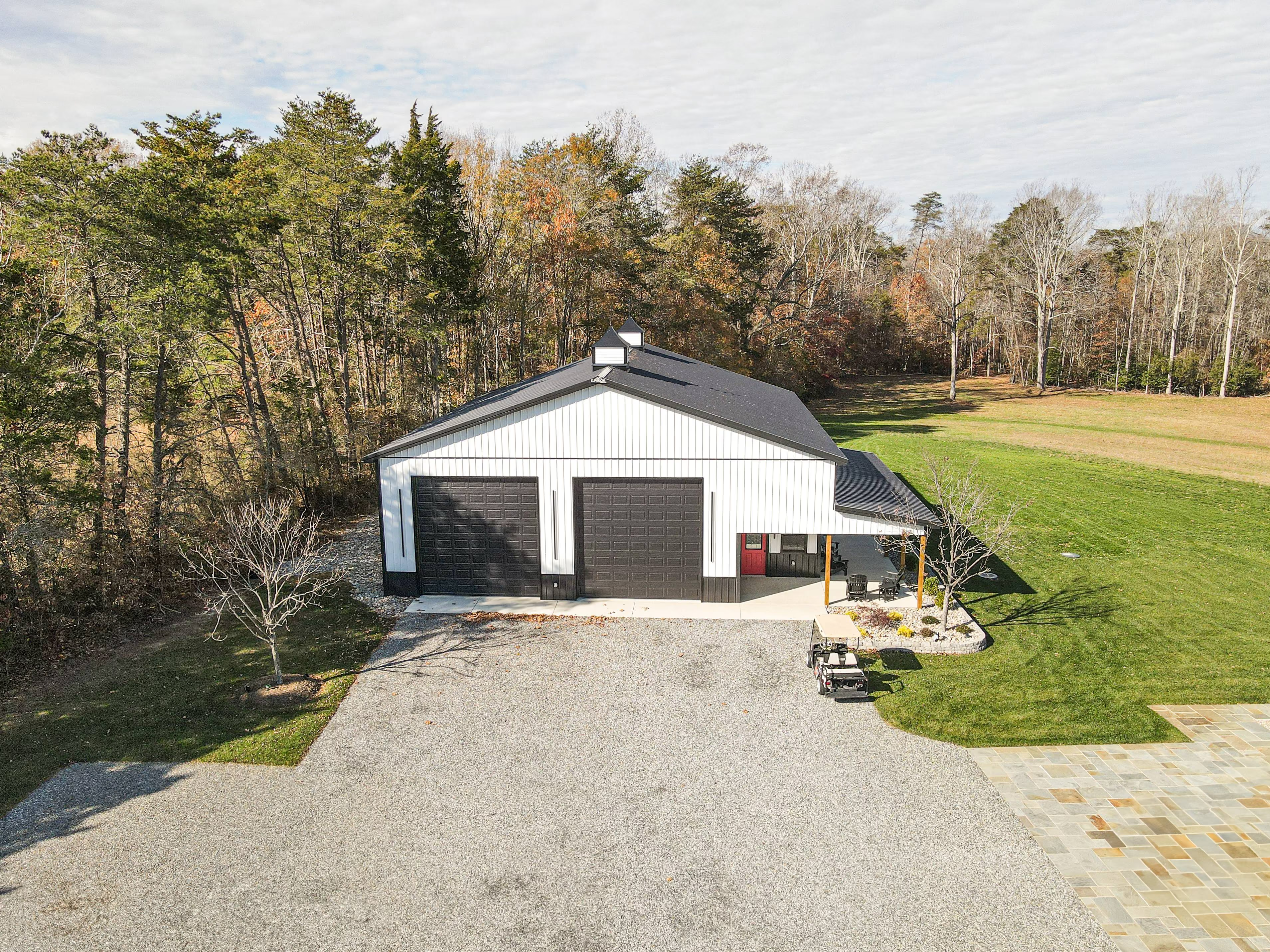
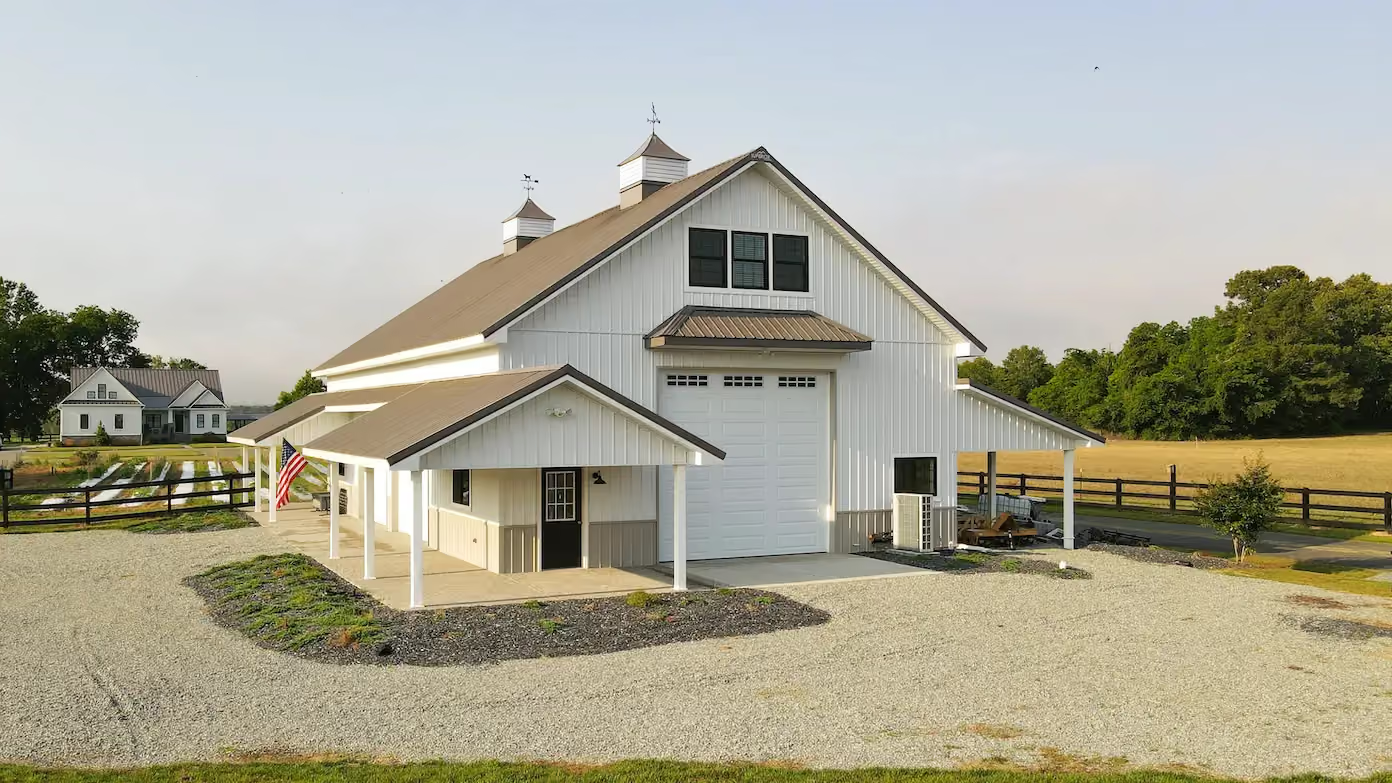
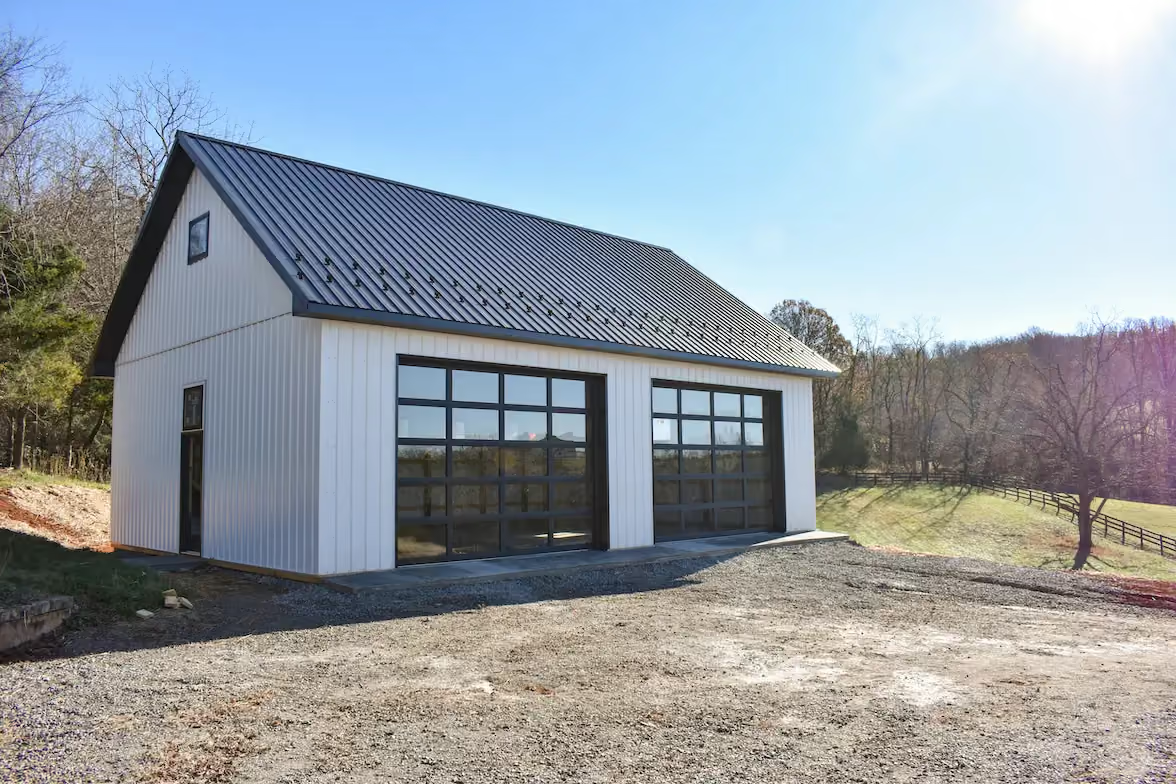
Sometimes a building's frame is sound but its use has changed. Renovation can turn an old barn into a workshop, garage, or event space by adding:
- New steel siding and roofing
- Insulation and interior liner panels
- Concrete floors
- Electrical service and lighting
- Windows and new door openings
- Lean-tos or porches
Renovating often costs less than building new, and it keeps a familiar structure on the property. Some changes, such as converting an agricultural building to a business or living space, may require permits. Check with Frederick County Building Inspections before you begin.
When It's Time to Replace
Replacement becomes the better option when:
- Many posts have rotted at once
- Trusses are damaged throughout
- The building is too small or too low for current needs
- Repair costs approach the price of a new building
Safety First
If a building is leaning, sagging noticeably, or has storm damage, keep people, animals, and equipment out until it's inspected. Heavy snow on a weakened roof is especially dangerous.
Questions to Ask Before Repairing
- "What's causing this damage, and has the cause been fixed?"
- "Is the structure sound enough to justify repairs?"
- "Will the repairs address the root cause or just the symptoms?"
- "Are there upgrades worth making while the work is underway?"
- "How long should these repairs last?"
Honest answers to these questions help you avoid spending money on a building that will need replacing anyway, or tearing down one that could have been saved with a few targeted repairs. Pole barn repair is usually most cost-effective when problems are caught early, so regular inspections pay for themselves.
Adding Life to an Older Barn
Many Frederick County barns still have decades of life left with targeted upgrades. Re-roofing with new steel, adding condensation control, replacing worn doors, and correcting drainage can transform an aging building. Adding gutters alone often extends post life by keeping water away from the base. Small investments like these are often the most cost-effective pole barn repairs you can make.
Pole Barn Repairs and Renovations in Frederick County
Superior Buildings provides pole barn repairs and renovations throughout Frederick County, Winchester, and Northern Virginia. We'll assess the building, explain your options, and recommend repair, renovation, or replacement based on what makes sense. Learn more about our repairs and renovations.
Contact us or call 540-269-2696 to schedule an assessment.