Pole Buildings in Culpeper County, VA
Steel Roofing and Siding for Metal Pole Buildings: A Culpeper County Guide
A farmer outside Culpeper puts up a new equipment shed on a budget. Two winters later, water drips from the underside of the roof every cold morning, rusting the tools stored below. The steel wasn't the problem. The missing condensation control was.
Steel is the most popular skin for pole buildings in Virginia, and for good reason. But "metal pole building" covers a wide range of products and details. Knowing the differences helps you choose a building that looks good and performs for decades. Here's what Culpeper County property owners should know.
Why Steel Is the Standard
- Durability: Steel resists rot, insects, and fire far better than wood siding.
- Low maintenance: Quality painted steel doesn't need regular painting or sealing.
- Speed: Long panels go up quickly, reducing labor.
- Weather resistance: Properly fastened steel sheds rain and snow well.
- Color choice: Dozens of colors let you match a house or create contrast.
Understanding Steel Gauge
Gauge describes the thickness of the steel. Counterintuitively, a lower gauge number means thicker steel. Post-frame buildings commonly use 29-gauge panels, with 26-gauge available as a heavier option. Thicker steel resists dents from hail, ladders, and equipment better, and can be a smart upgrade for wainscot or high-traffic walls.
Paint Systems and Warranties
Steel panels are coated with a protective metallic layer and then painted. The paint system affects how well color holds up against sun exposure:
- Siliconized polyester (SMP) is a common, cost-effective finish for agricultural and residential buildings.
- PVDF (often known by the Kynar brand) offers superior color retention and chalk resistance, at a higher price.
Manufacturers offer separate warranties for the panel and paint finish. Ask which product and finish your building will use.
Panel Profiles
Exposed-fastener ribbed panels
The most common choice for pole buildings. Panels are screwed through the face into the framing. They're economical and quick to install. Fastener placement and quality screws with sealing washers matter for long-term weather tightness.
Standing seam
Concealed fasteners and raised seams give a clean, upscale look and allow the steel to expand and contract freely. Standing seam costs more and is often chosen for homes, offices, or buildings where appearance matters most.
Condensation: The Hidden Issue
When warm, moist air meets cold steel, water condenses on the underside of the roof. In Virginia's humid climate, this can lead to dripping, rust, and damage to stored items. Solutions include:
- Condensation control membranes factory-applied to the underside of roof panels
- Reflective or vapor-barrier insulation under the steel
- Full insulation for heated or finished spaces
- Ventilation through ridge and eave vents to move moist air out
If you'll store equipment, vehicles, hay, or anything you care about, condensation control is worth including.
Trim and Details That Make a Difference
- Color-matched trim at corners, doors, and windows
- Wainscot in a contrasting color or heavier steel
- Gutters and downspouts to control water at the foundation
- Overhangs that protect walls and doors from rain
- Snow guards on roofs over doorways and walkways
Steel Doesn't Mean Plain
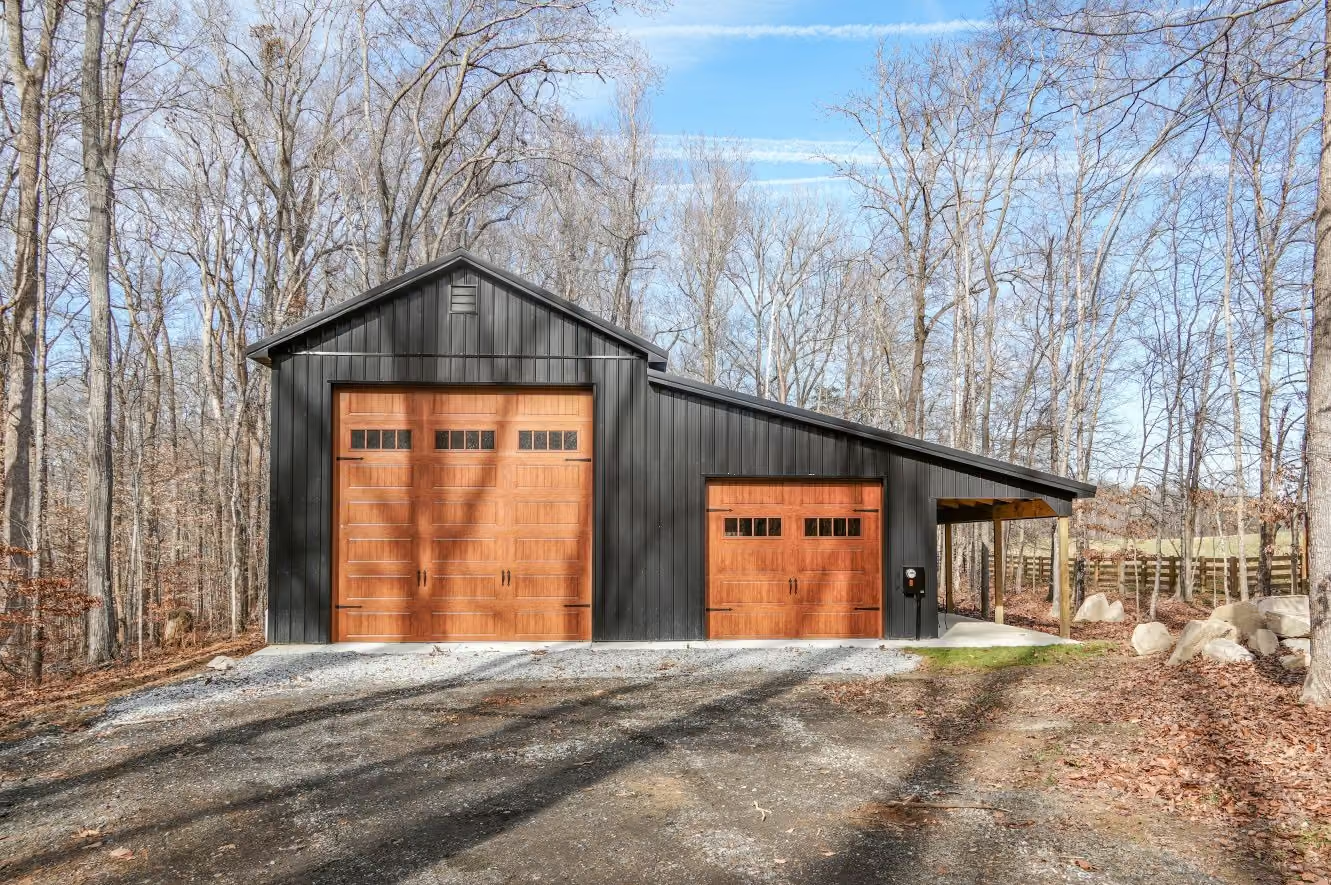
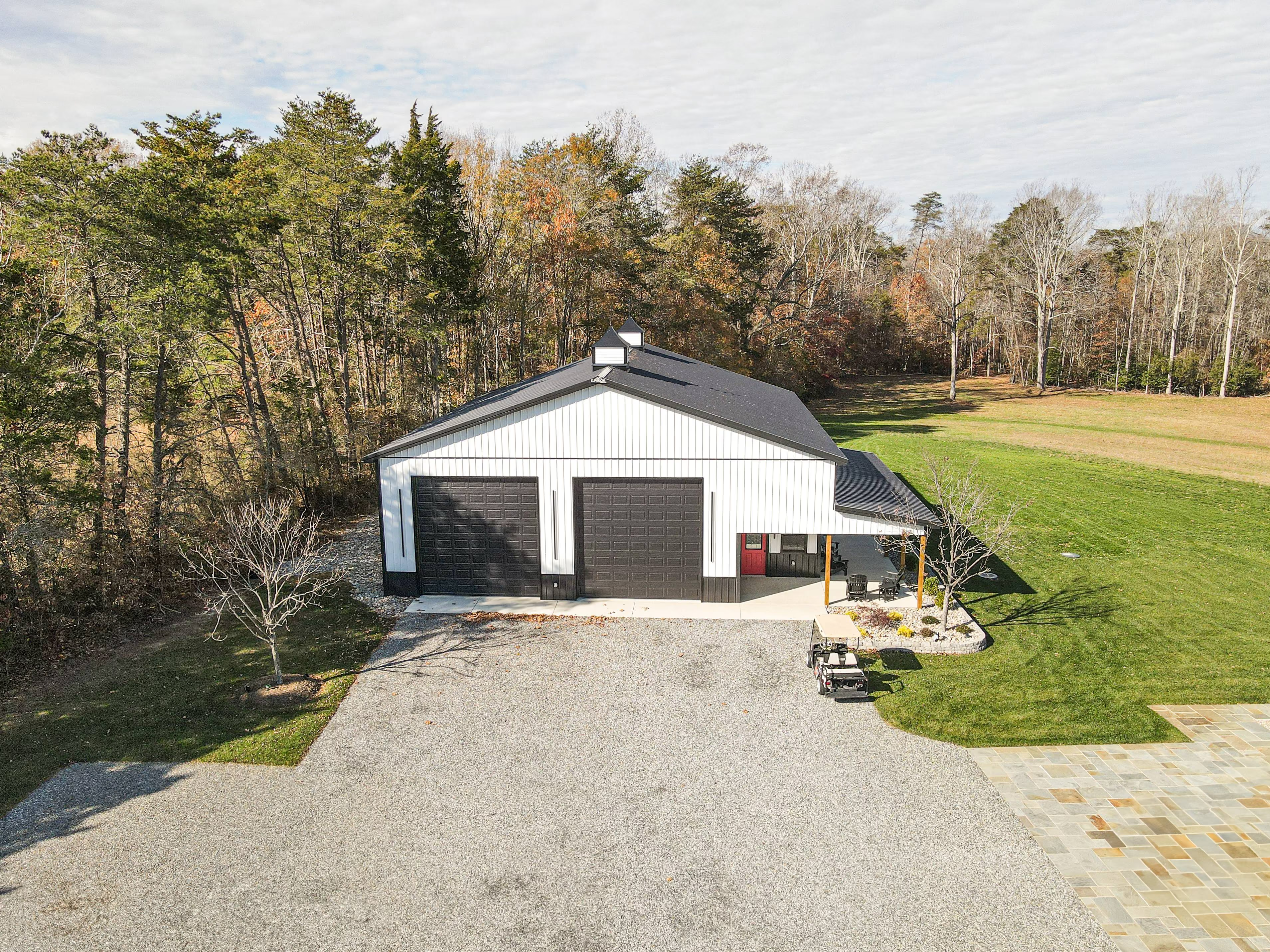
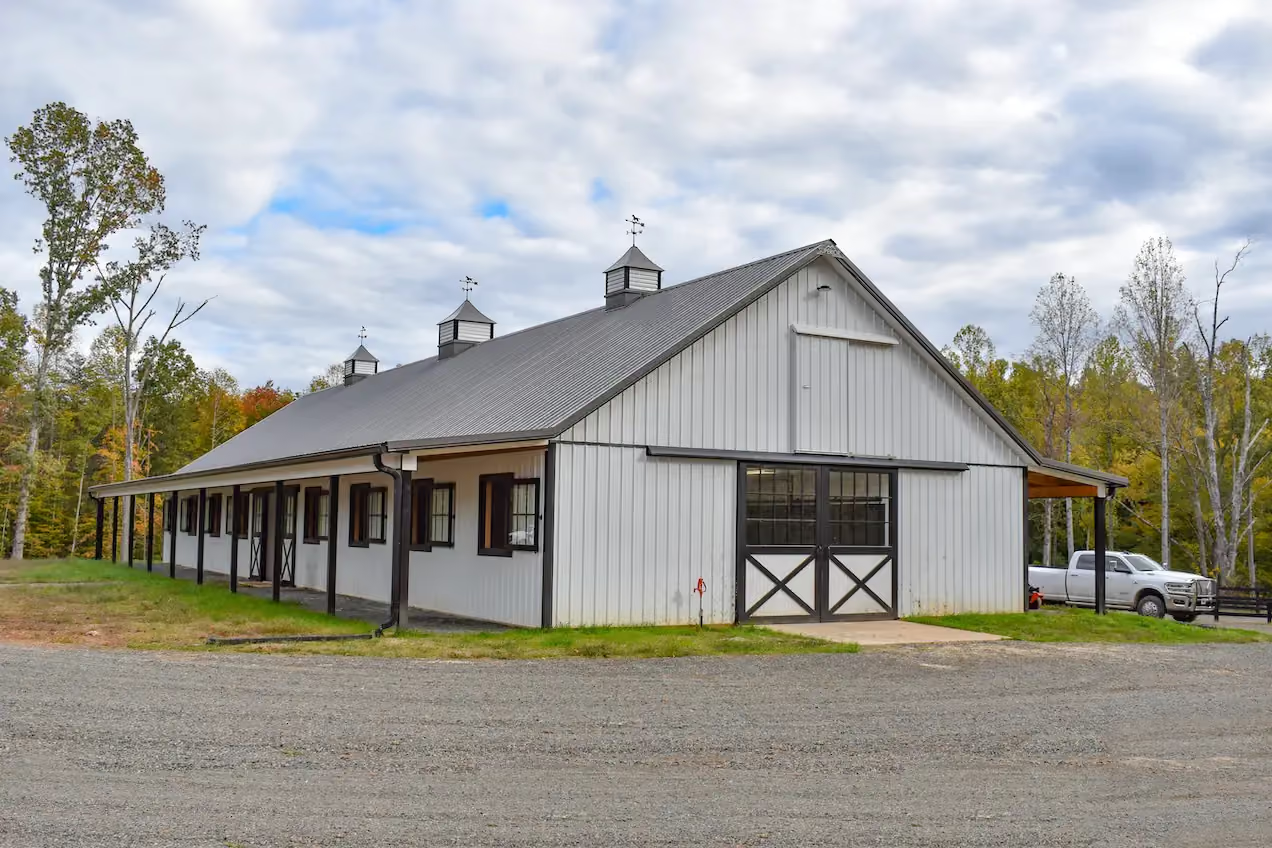
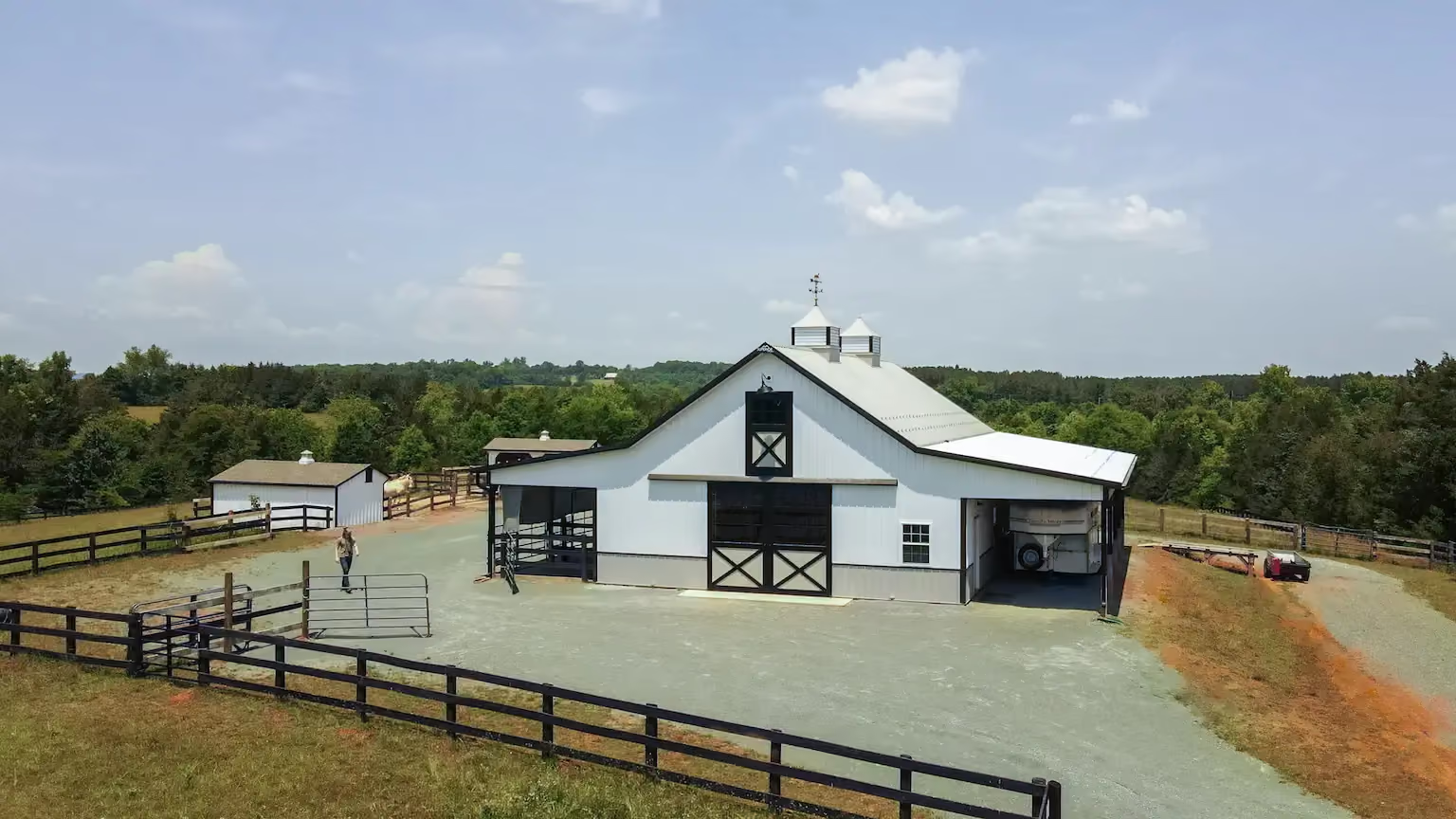
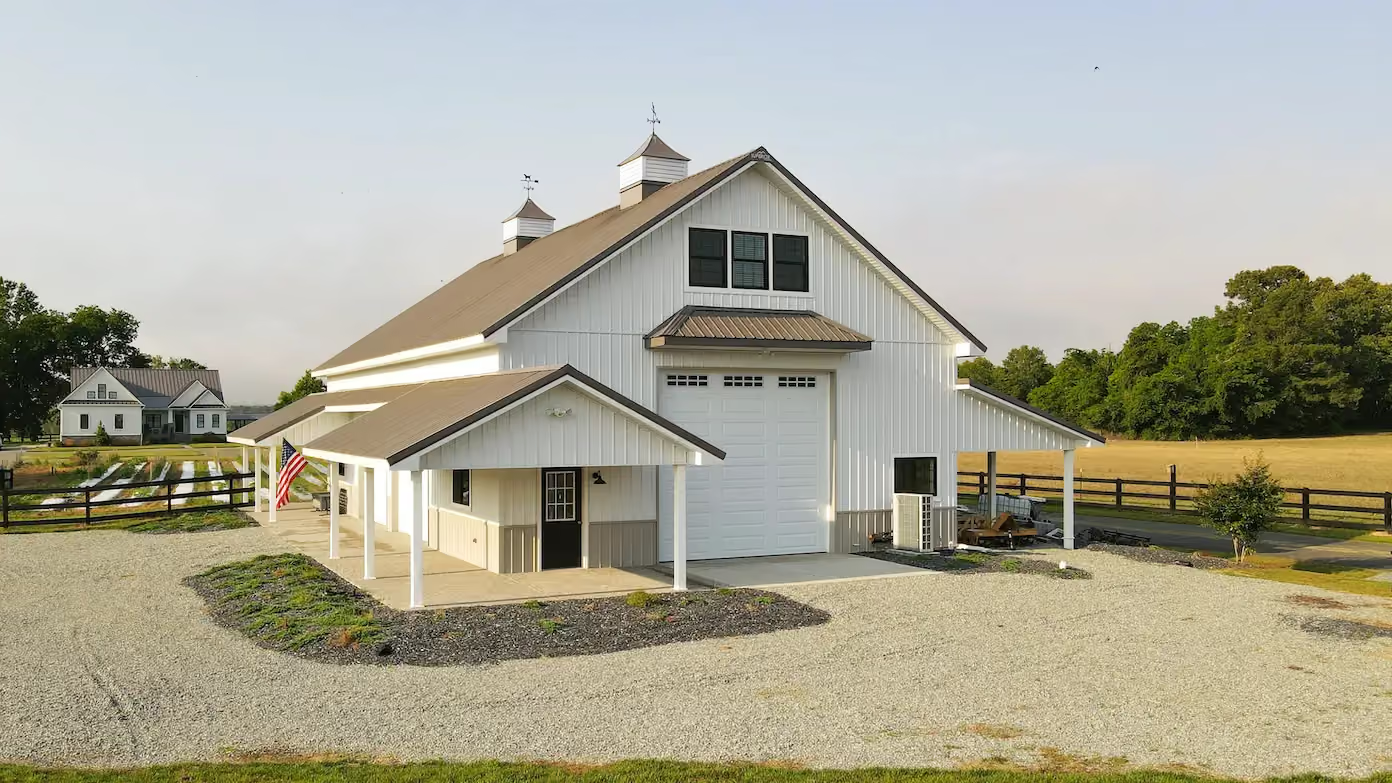
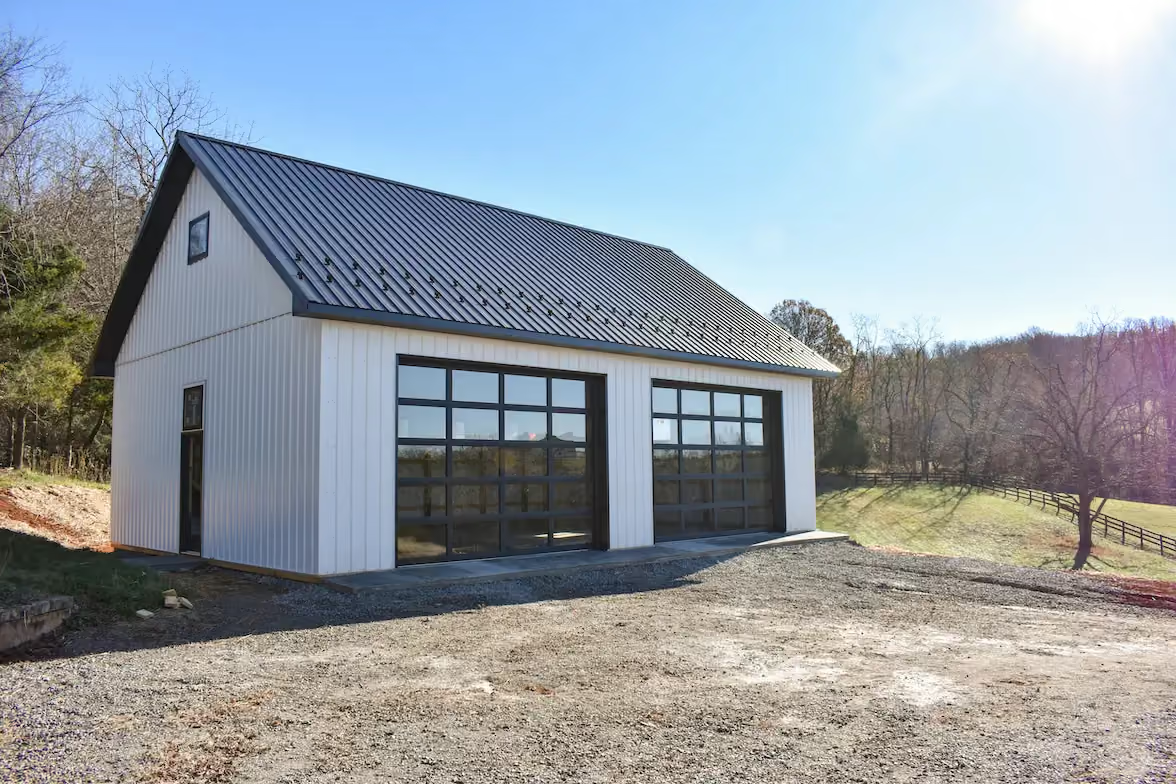
A metal pole building can look as polished as a custom home. Two-tone color schemes, wainscot, cupolas, gable accents, and porches all add character. Choose colors with our color visualizer, and request free metal samples to see colors in natural light on your property.
Building in Culpeper County
Culpeper County's mix of farmland, horse properties, and growing residential areas means steel pole buildings serve many purposes, from hay barns and equipment storage to detached garages and small business shops. Before building, confirm setback, zoning, and permit requirements with the county, especially for buildings near property lines or on residential lots.
Common Questions About Metal Pole Buildings
Is a steel building noisy in the rain?
Uninsulated steel can be loud during heavy rain. Insulation and condensation membranes under the roof reduce noise significantly.
Will steel siding dent?
It can, especially at lower wall heights where equipment and lawn mowers pass. Heavier-gauge wainscot or interior liner panels help protect the most exposed areas.
How long does steel last?
Quality painted steel can last for decades with minimal maintenance. Keeping gutters clear, replacing damaged fasteners, and cleaning off debris all help.
Can I mix steel with other materials?
Absolutely. Many metal pole buildings combine steel with stone wainscot, wood accents, or board-and-batten for a custom look.
Hail, Wind, and Snow
Central Virginia sees summer thunderstorms with occasional hail and gusty winds, plus the odd heavy, wet snowfall. Steel panels fastened to engineered framing at the right spacing hold up well, but the details matter: correct fastener patterns, quality screws, solid trim at edges and corners, and doors rated for wind. A steel building contractor should design and install to the wind and snow loads that apply to your site.
Steel Building Contractors in Culpeper County
Superior Buildings is a Certified Class A Contractor and Virginia family-owned pole building company. We design and build steel-clad agricultural, residential, and commercial pole buildings across Culpeper County and Central Virginia.
Contact us or call 540-269-2696 for a free quote.